Minecraft, OCaml and NES emulation — on a 1960s UNIVAC 1219B
The stunt
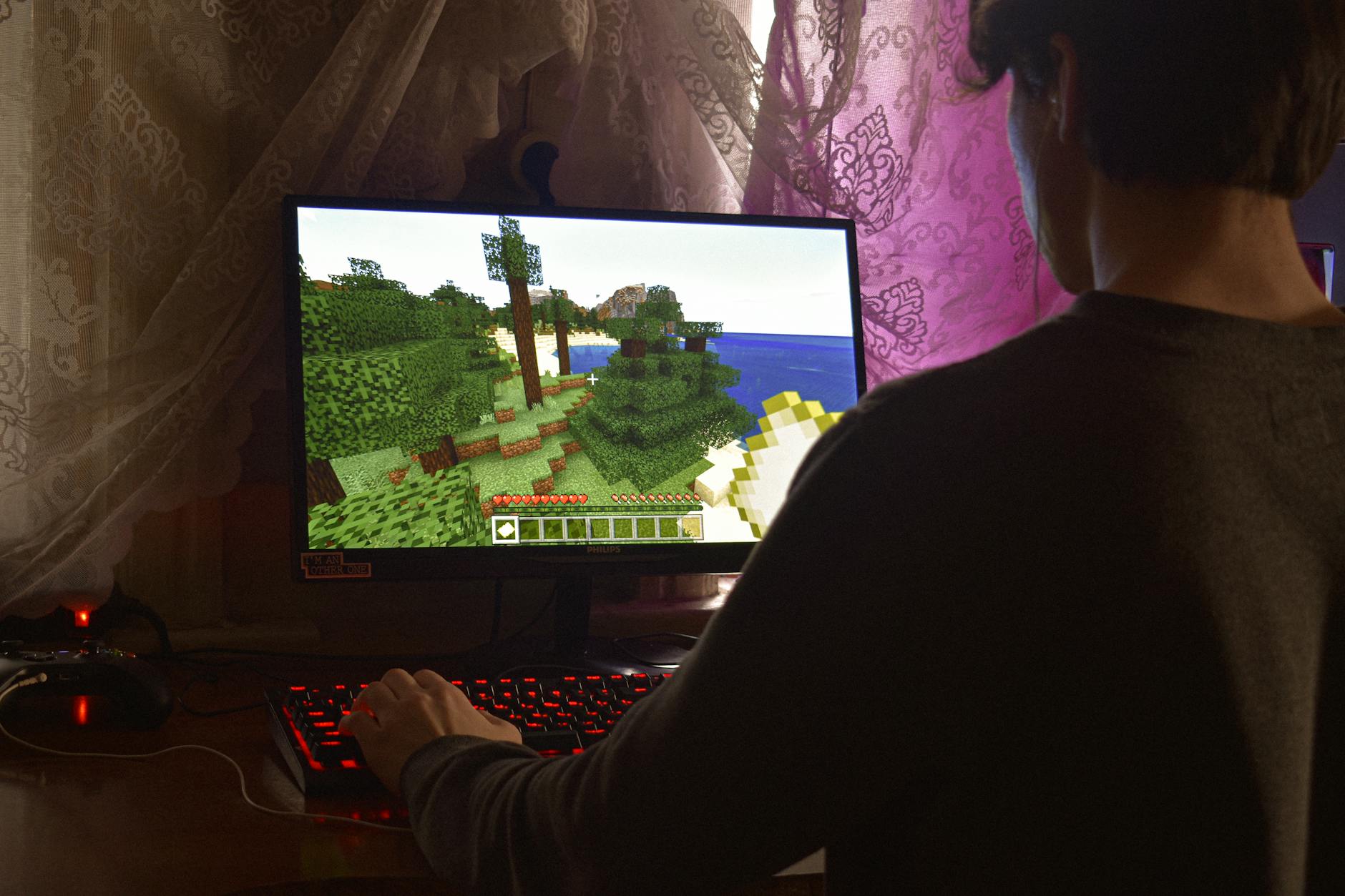
It has been reported that a group of retrocomputing enthusiasts managed to run a bewildering suite of modern software on an operational UNIVAC 1219B — yes, the hulking 1960s machine that once guided naval radar and artillery. Minecraft (server), a NES emulator rendering the first frame of Pinball, a selfie printed with the old-school “overstrike” teletype trick: all of it. They also reportedly pushed OCaml, a webserver, Curve25519 + AES crypto, a BASIC interpreter, ELIZA, and games like Oregon Trail, Wordle and Battleship onto a computer that runs at roughly 250 kHz and has about 90 KB of RAM. Wild? Absolutely.
The machine and the how
The UNIVAC 1219B is, by modern standards, gloriously hostile to programming. It uses 18‑bit words (addresses and values!), ones’‑complement arithmetic with weird signed‑zero quirks, a tiny set of registers (a 36‑bit A that can be split into AU:AL plus an 18‑bit B), only 40,960 words of memory, and that memory is banked into ten banks — you choose which bank your instructions address ahead of time. To get anything more than hand‑written assembly running, the team rebuilt tooling: Duane’s old assembler (written in BASIC) and a VB.NET emulator were used as starting points, and TheScienceElf rewrote an assembler and emulator in Rust. It has been reported that the Rust emulator runs about 400× faster than the real hardware and some 40,000× faster than the VB.NET version — speeds that enabled heavy fuzz testing and faster iteration.
The emotional core
The key moment? Seeing the machine in person at VCF East 2025 — the toggling lights, the teletype clack, the smell of oil and old paper. The project lead says that encounter lit the fuse: “not just fizzbuzz,” they wanted to know how far they could push the iron. Eight months of gritty work followed. The result is part technical museum restoration, part modern engineering sprint — a love letter to computing’s mechanical roots and to the people who rescue and keep these rare machines alive. Only two UNIVAC 1219s are known to survive, both recovered from Johns Hopkins by Vintage Computer Federation volunteers; this is reportedly the only operational one.
Why it matters
Beyond the headline-grabbing novelty, this is about tooling, persistence, and translation across eras. Getting C, higher‑level languages and cryptography to run on mid‑20th‑century architecture exposes assumptions we take for granted in software today and shows how far engineers can stretch constraints. The project’s source and a video walkthrough by TheScienceElf have been published for others to study — and yes, if you like seeing modern code squeeze through historic hardware, this one’s pure catnip.
Sources: farlow.dev, Lobsters
Comments